IT Solutions Experts

Marketing Strategy

अपने व्यवसाय को ऑनलाइन कैसे ले जाएं: भारत में वेबसाइट और डिजिटल मार्केटिंग के माध्यम से व्यवसाय विकास का सरल तरीका

ऑनलाइन व्यवसाय का महत्व वर्तमान डिजिटल युग में, व्यवसायों के लिए ऑनलाइन उपस्थिति अत्यंत महत्वपूर्ण हो गई है। ग्राहक अब अपनी आवश्यकताओं को पूरा करने के लिए इंटरनेट का उपयोग सबसे पहले करते हैं। इस बदलते परिदृश्य में, व्यवसायों के लिए यह आवश्यक हो गया है कि वे ऑनलाइन प्लेटफॉर्म पर सक्रिय रूप से उपस्थित हों। ऑनलाइन व्यवसाय का एक प्रमुख लाभ यह है कि यह नए अवसरों को जन्म देता है। जब व्यवसाय एक वेबसाइट के माध्यम से अपने सेवाओं और उत्पादों का प्रदर्शन करते हैं, तो वे एक व्यापक दर्शक वर्ग को अपनी तरफ आकर्षित कर सकते हैं। इसके अतिरिक्त, वेबसाइट विकास सेवाएँ भारत में व्यवसायों को डिज़ाइन और विकास के माध्यम से उत्कृष्ट ऑनलाइन उपस्थिति के निर्माण में मदद करती हैं। वेबसाइट न केवल व्यक्तिगत उपयोगकर्ता अनुभव को बेहतर बनाती है, बल्कि यह व्यवसायों को अपने लक्षित ग्राहकों तक अधिक तेजी से पहुँचने की अनुमति देती है। जब लोग इंटरनेट पर खोज करते हैं, तो एक पेशेवर वेबसाइट उनके लिए एक विश्वसनीय स्रोत बन जाती है, जिससे उनके भरोसे को बढ़ावा मिलता है। डिजिटल मार्केटिंग इंडिया जैसे आधुनिक मार्केटिंग टूल का उपयोग करके, एक व्यवसाय को अपनी पहुँच को और भी बढ़ाने का अवसर मिलता है। सोशल मीडिया, सर्च इंजन ऑप्टिमाइज़ेशन (SEO), और ईमेल मार्केटिंग ऐसे कारक हैं जो व्यवसायों को अपने लक्षित ग्राहकों तक पहुँचने के लिए आवश्यक विभिन्न उपकरण प्रदान करते हैं। इन तकनीकों का प्रभावी उपयोग करके व्यवसाय न केवल अपनी बिक्री बढ़ा सकते हैं बल्कि एक स्थायी ब्रांड छवि भी बना सकते हैं। परिणामस्वरूप, ऑनलाइन व्यवसायों का महत्व और भी बढ़ जाता है, जिससे यह अद्वितीय अवसरों की खोज को प्रोत्साहित करता है। व्यवसाय की योजना बनाना एक सफल ऑनलाइन व्यवसाय स्थापित करने के लिए एक ठोस व्यवसाय योजना का निर्माण अनिवार्य है। व्यवसाय योजना केवल एक दस्तावेज़ नहीं है, बल्कि यह आपके व्यवसाय के उद्देश्यों, लक्ष्यों और उसके विकास की दिशा को परिभाषित करने वाली एक आधारशिला है। व्यवसाय योजना बनाने के पहले चरण में, आपको अपने व्यवसाय के उद्देश्यों को स्पष्ट रूप से परिभाषित करना होगा। यह जानना आवश्यक है कि आप अपने व्यवसाय को ऑनलाइन कैसे ले जाएंगे। क्या आपका उद्देश्य अधिक ग्राहकों तक पहुँचना है, या आप अपनी उत्पाद श्रृंखला का विस्तार करने की सोच रहे हैं? ये उद्देश्य आपकी व्यवसाय योजना के मूल तत्व होंगे। दूसरा महत्वपूर्ण तत्व है बाजार का विश्लेषण। यहाँ आपको अपने लक्षित ग्राहक समूह, प्रतिस्पर्धी, और बाजार के रुझानों के बारे में जानकारी एकत्रित करनी होती है। यह जानकारी आपको यह समझने में मदद करेगी कि आपके व्यवसाय को डिजिटल मार्केटिंग के माध्यम से कैसे विकसित किया जा सकता है। साथ ही, यह आपको यह भी बताएगी कि कौन से वेबसाइट विकास सेवाएँ भारत में आपके लिए सबसे उपयुक्त होंगी। अंत में, एक वित्तीय योजना तैयार करें। इसमें आपके प्रारंभिक निवेश, संभावित मुनाफे का अनुमान, और कार्यशील पूंजी की आवश्यकता शामिल होनी चाहिए। आपके व्यवसाय की योजना में एक मजबूत वित्तीय दृष्टिकोण होना आवश्यक है, जिससे आप अपने व्यवसाय को स्थिरता और वृद्धि के रास्ते पर आगे बढ़ा सकें। इस प्रकार, एक सुविचारित व्यवसाय योजना, आपको उत्कृष्ट वेबसाइट विकास सेवाएँ चुनने और प्रभावी डिजिटल मार्केटिंग भारत के लिए एक ठोस रणनीति बनाने में सहायता कर सकती है। डिजिटल मार्केटिंग के प्रकार डिजिटल मार्केटिंग, आधुनिक व्यवसाय में वृद्धि और सफलता के लिए एक अनिवार्य टूल है। भारत में, व्यवसायों के लिए विभिन्न प्रकार की डिजिटल मार्केटिंग सेवाएं उपलब्ध हैं, जो उन्हें ऑनलाइन उपस्थिति मजबूत करने और अपने लक्षित दर्शकों तक पहुंचने में मदद करती हैं। सबसे प्रमुख प्रकारों में से एक सामाजिक मीडिया मार्केटिंग है, जो व्यवसायों को फेसबुक, इंस्टाग्राम, और ट्विटर जैसे प्लेटफार्मों पर अपनी ब्रांड पहचान बनाने और ग्राहकों के साथ जुड़ने की अनुमति देती है। यह दृष्टिकोण ग्राहकों की सहभागिता को बढ़ा सकता है और ग्राहकों का विश्वास जीत सकता है। दूसरा महत्वपूर्ण प्रकार सर्च इंजन ऑप्टिमाइजेशन (SEO) है, जो वेबसाइट के खोज परिणामों में बेहतर रैंकिंग प्राप्त करने पर केंद्रित है। SEO तकनीकों का उपयोग करके, व्यवसाय अपने वेबसाइट ट्रैफ़िक को बढ़ा सकते हैं और संभावित ग्राहकों को आकर्षित कर सकते हैं। सही कीवर्ड, सामग्री अनुकूलन, और तकनीकी SEO जैसे घटक इस प्रक्रिया में महत्वपूर्ण भूमिका निभाते हैं। ईमेल मार्केटिंग भी डिजिटल मार्केटिंग की एक प्रभावशाली विधि है। यह व्यवसायों को सीधी संचार के माध्यम से ग्राहकों के साथ जुड़ने की सुविधा प्रदान करती है। अनुकूलित ईमेल अभियानों के ज़रिए उत्पादों और सेवाओं की जानकारी साझा करना, ऑफ़र देना, और ग्राहकों की प्रतिक्रिया प्राप्त करना संभव है। आखिरकार, कंटेंट मार्केटिंग व्यवसायों को उनकी विशेषज्ञता, मूल्यवान जानकारी, और आकर्षक सामग्री के माध्यम से ग्राहकों को जोड़ने में मदद करती है। यह ब्लॉग, वीडियो, और अन्य डिजिटल सामग्री के रूप में हो सकती है, जो उपयोगकर्ताओं को ज्ञान प्रदान करती है और उन्हें आकर्षित करती है। इन विभिन्न प्रकार की डिजिटल मार्केटिंग का उपयोग कर, व्यवसाय अपने उद्देश्यों को साकार कर सकते हैं और अपने व्यवसाय को ऑनलाइन कैसे ले जाएं इस दिशा में मजबूती से कदम रख सकते हैं। सही लक्षित दर्शक का निर्धारण एक सफल व्यवसाय ऑनलाइन kaise le jaye का प्रयास करते समय सही लक्षित दर्शक का निर्धारण करना अत्यंत आवश्यक है। जब आप अपने अनुचित लक्षित दर्शकों की पहचान करते हैं, तो आपके विपणन प्रयास अधिक प्रभावी और कुशल बनते हैं। लक्षित दर्शकों का सही निर्धारण करने के लिए, सबसे पहले आपको यह समझना होगा कि आपके उत्पाद या सेवा का उपयोग करने में किन लोगों को रुचि हो सकती है। इसके लिए आप अपने ग्राहकों के जनसांख्यिकीय, मनोवैज्ञानिक और व्यवहार संबंधी मापदंडों का सर्वेक्षण कर सकते हैं। उदाहरण के लिए, यदि आप एक वेबसाइट विकास सेवाएँ India में प्रदान करते हैं, तो आपको उन व्यवसायों पर ध्यान केंद्रित करना चाहिए जो अपने ऑनलाइन उपस्थिति को बढ़ाना चाहते हैं। इसी तरह, डिजिटल मार्केटिंग India में विभिन्न प्रकार के व्यवसायों के लिए आवश्यक होती है, और आप यह पहचानने की कोशिश करें कि कौन से व्यवसाय आपके सेवाओं के लिए सबसे अधिक उपयुक्त हैं। इसके अलावा, संभावित ग्राहकों के साथ इंटरैक्ट करने के लिए सोशल मीडिया प्लेटफार्मों का प्रयोग करें। यहां पर आप यह जान सकते हैं कि आपके दर्शक किस प्रकार की सामग्री, उत्पाद या सेवाओं में रुचि

अपने व्यवसाय को ऑनलाइन कैसे ले जाएं: भारत में वेबसाइट और डिजिटल मार्केटिंग के माध्यम से व्यवसाय विकास का सरल तरीका Read More »

The Future of Business Efficiency: Custom Software Development, CRM Benefits, and the Power of Automation Tools

Introduction to Custom Software Development Custom software development plays a pivotal role in the modern business landscape, providing tailored solutions specifically designed to meet an organization’s unique needs. Unlike off-the-shelf software, which is standardized and not customizable, custom software development allows businesses to create applications that are aligned with their specific workflows, goals, and operational requirements. This distinction is crucial, as it enables companies to enhance not only their performance and efficiency but also the overall user experience. One of the primary advantages of custom software is its ability to adapt to the evolving requirements of a business. As organizations grow and change, their software must also be flexible enough to support new strategies and processes. In contrast, off-the-shelf solutions often require users to adjust their operations to fit the software’s capabilities, leading to potential inefficiencies or mismatches in expected functionality. With custom software development, businesses can implement features that directly correlate with their operational objectives, promoting streamlined workflows and improved productivity. Furthermore, by investing in custom solutions, organizations can leverage business automation tools that are integrated seamlessly with their specific systems. This integration facilitates the optimization of various processes thus, allowing for automation where it is most beneficial. For example, a company can develop CRM software for business that aligns with its unique client engagement strategies, ensuring that all customer interactions are efficiently managed according to the specific demands of the organization. Ultimately, custom software development represents a strategic investment in the future efficiency of a business. By leveraging tailored solutions, organizations gain not just a competitive edge but also the ability to adapt rapidly in a fast-paced market environment. This adaptability can be the key factor in achieving long-term success and sustainability. Understanding CRM Software and Its Importance Customer Relationship Management (CRM) software is a crucial tool in modern business operations, designed to enhance the management of customer interactions, streamline processes, and drive sales growth. By consolidating and organizing customer data, CRM systems facilitate improved communication and collaboration among teams, ensuring that customer engagements are not only effective but personalized. The significance of CRM software for businesses extends beyond mere data storage. It enables organizations to analyze customer behavior and preferences, allowing for a tailored approach to service delivery. This capability not only fosters stronger customer relationships but also enhances customer satisfaction, as businesses can respond more effectively to customer needs. The implementation of CRM systems is closely associated with the advancement of business automation tools that further optimize various functions, such as marketing and sales. With the rise of digital forms of communication, CRM systems have become even more vital. They offer a centralized platform that integrates different channels, providing businesses with a cohesive view of customer interactions. This holistic understanding is essential for crafting coherent marketing strategies and improving sales performance. Moreover, CRM software enables tracking of sales pipelines and forecasting, ultimately leading to better decision-making and resource allocation. In essence, adopting CRM software for business translates to enhanced efficiency through streamlined operations and data-driven insights. Its strategic value lies in the ability to leverage customer data not just to enhance relationships but also to drive sales performance, positioning businesses competitively in a rapidly changing marketplace. The role of CRM in business automation is indispensable, making it an integral component for organizations aiming for operational excellence. Benefits of Custom CRM Solutions In today’s rapidly evolving business landscape, organizations increasingly recognize the value of custom CRM (Customer Relationship Management) solutions in enhancing operational efficiency. Unlike standard CRM options that offer a one-size-fits-all approach, custom CRM software is tailored to meet specific business requirements. This customization allows companies to address their unique processes and workflows, thereby optimizing user experience and enhancing productivity. One of the key advantages of implementing custom CRM solutions is their ability to seamlessly integrate with existing systems. Businesses often utilize a range of software tools for various functions, such as marketing, sales, and customer support. With custom CRM software for business, integration with these existing platforms is designed from the ground up, reducing friction and enabling smoother data sharing. This interoperability fosters a unified view of customer interactions, contributing to more informed decision-making and enhanced customer service. Moreover, custom CRM systems provide actionable insights by leveraging data analytics that are specifically relevant to the business. These insights can help organizations understand customer behavior, track engagement levels, and identify areas for improvement. By utilizing business automation tools, businesses can proactively manage customer relationships and maintain higher retention rates. The tailored nature of these solutions ensures that the generated insights are aligned with strategic objectives, ultimately translating into increased customer satisfaction. In conclusion, the distinct benefits offered by custom CRM solutions—such as tailored features, seamless integration, and actionable insights—make them an essential investment for businesses aiming to improve their efficiency and foster stronger customer relationships in an increasingly competitive environment. The Role of Automation Tools in Business Growth Automation tools have emerged as pivotal components in fostering business growth by enhancing operational efficiency and effectiveness. These tools are designed to automate repetitive tasks, thereby allowing organizations to focus their resources on more strategic functions. By integrating automation into their workflows, businesses can significantly reduce manual labor, minimize errors, and expedite processes, which translates into increased productivity. There are various types of automation tools, each tailored to address specific business needs. For instance, marketing automation platforms help companies streamline campaigns, manage customer interactions, and gather valuable data for analysis. These tools not only enhance customer relationship management (CRM) but also facilitate personalized communication, thereby improving customer engagement and retention. In addition to marketing tools, there are business automation tools that focus on internal processes. Solutions such as project management software, workflow automation, and document management systems enable teams to collaborate efficiently and ensure that important tasks are completed on time. These tools often incorporate features like task assignment, deadline tracking, and real-time updates to keep all stakeholders informed and engaged. Moreover, CRM software for business can be integrated with various automation tools to create a comprehensive

The Future of Business Efficiency: Custom Software Development, CRM Benefits, and the Power of Automation Tools Read More »

Creating a Professional Website for Your Business: A Step-by-Step Beginner’s Guide

Introduction to Website Creation In today’s digital age, having a professional website for your business is no longer a luxury but a necessity. A well-designed website serves as the digital face of your business, enabling prospective customers and partners to access vital information about your products and services. It establishes credibility and acts as a platform for customer interactions, making it essential for fostering relationships in the business world. The importance of an online presence cannot be overstated. First, a business website greatly expands your reach by allowing you to connect with a global audience. Customers can find your business through online searches at any time, removing geographical barriers that may limit your customer base. This accessibility caters to the modern consumer who increasingly relies on the internet to make informed purchasing decisions. Additionally, a website provides a host of marketing opportunities. Through search engine optimization (SEO), content marketing, and social media integration, businesses can strategically enhance their visibility online. With the right guidance, such as following a comprehensive WordPress website tutorial or utilizing a detailed business website guide, even beginners can successfully create a platform that showcases their brand identity and engages their target audience effectively. Moreover, a business website serves as a repository for essential information such as contact details, product listings, and resources, which enhances customer service. It allows for easy updates and additions, ensuring that customers always have the most current information at their fingertips. In essence, learning how to create a website for business is not just about establishing an online presence; it is about creating a valuable asset that can drive growth and engender trust among customers. Identifying Business Goals Before diving into how to create a website for business, it is essential first to clearly identify your business goals. These goals serve as a foundation upon which your website will be built. Whether your aim is to generate leads, increase brand awareness, or facilitate online sales, knowing your primary objectives will shape the entire web development process. Consider what a successful website looks like for your business and outline specific metrics for success. Evaluating Target Audiences Understanding your target audience is another crucial step in the website creation process. This involves identifying who your potential customers are, what their interests entail, and how they typically engage with similar businesses online. Conducting market research can help clarify the demographics, preferences, and pain points of your audience. To develop an effective business website guide, it is important to craft content that resonates with these users and addresses their specific needs. Determining Website Purpose Every successful business website serves a distinct purpose. Hence, you must analyze what role your site will play in achieving your business objectives. Will it function as an information hub, an e-commerce platform, or perhaps a portfolio showcasing your services? Understanding the purpose of your website will dictate the design and functionality options you will consider during the development phase. A clear articulation of purpose ensures that you select a suitable WordPress website tutorial that aligns with your vision. Types of Products or Services Finally, identifying the products or services that will be featured on your website is vital in shaping both content and design. It is essential to categorize these offerings effectively, thereby ensuring a user-friendly experience. The organization should reflect your overall business strategy, emphasizing key products and allowing for seamless navigation. This alignment is critical for maintaining an engaging website that communicates your brand’s values. Choosing the Right Website Platform When it comes to learning how to create a website for business, the first step is selecting the appropriate platform. Various website builders cater to different needs, technical skills, and budgets. Among the most popular platforms are WordPress, Wix, and Squarespace, each offering unique features that may influence your decision. WordPress is widely recognized for its flexibility and customization options. It powers a significant portion of the web and boasts a myriad of plugins and themes that allow users to create highly tailored business websites. While WordPress requires some technical knowledge, its vast community and resources, including comprehensive WordPress website tutorials, provide ample guidance for beginners. Moreover, it is essential to consider hosting fees and the cost of premium features when budgeting for your website. On the other hand, Wix provides a more user-friendly interface, enabling users to drag and drop elements to build their websites easily. This platform is geared toward those who prioritize straightforwardness and speed in launching their online presence. It comes with various pricing plans, making it suitable for different budgets. However, customization options may be limited compared to WordPress, which could restrict the ability to adapt the site as the business grows. Squarespace, renowned for its aesthetic templates, is an excellent choice for businesses focused on design. It integrates e-commerce functionalities seamlessly, which is beneficial for entrepreneurs looking to sell products or services directly from their websites. While Squarespace’s pricing is relatively higher than that of its competitors, its all-in-one approach simplifies the process of building and maintaining a business website. Ultimately, the choice of platform should align with your technical expertise, budgetary constraints, and specific business requirements. Carefully evaluating these factors will guide you in selecting the right option to create a professional website that meets your needs. Domain Name Selection Choosing the right domain name is a crucial step when learning how to create a website for business. Your domain name serves as your online identity and directly impacts your brand’s perception. Therefore, it is important to select a name that is not only memorable but also reflective of your business’s mission and values. To start, consider a domain name that accurately represents your brand or the services you offer. It should be concise, easy to spell, and pronounce. Avoid using complex words or variations that could confuse potential visitors. A straightforward name will make it easier for customers to find and remember your website. Also, try to incorporate relevant keywords that describe your business or industry, as this can aid

Creating a Professional Website for Your Business: A Step-by-Step Beginner’s Guide Read More »

Choosing the Best Affordable Web Design Services in India

Understanding Affordable Web Design Services When embarking on a digital project, selecting the right web design service is crucial. The best website development companies in India provide affordable solutions that cater to various needs, ensuring small businesses can establish a strong online presence without plunging into financial strain. These services encompass everything from website layout and graphics to user experience, creating an attractive, functional site. Benefits of Custom Software Development In today’s competitive marketplace, custom software development can provide a significant advantage. These offerings are tailored to meet the unique challenges of your business, streamlining operations and enhancing efficiency. Affordable web design services often include options for custom software, allowing organizations to fine-tune their digital interfaces and backend processes based on specific requirements. Choosing the Right Company Finding the best website development company in India involves more than just comparing prices. Look for a firm that showcases a proven track record in delivering effective solutions, high customer satisfaction rates, and a portfolio that reflects diversity in design styles. Reading reviews and gathering feedback from previous clients can also be helpful in making an informed choice. In conclusion, opting for the best web design services can elevate your business to new heights. Whether through affordable options or custom software development, it’s essential to choose a provider that aligns with your vision and goals, paving the way for a successful online experience.

Choosing the Best Affordable Web Design Services in India Read More »

The Importance of Having a Strong Online Presence in 2026

Why Online Presence Matters In today’s digital world, the importance of establishing a strong online presence cannot be overstated. As we move into 2026, having a well-defined presence online is no longer an option but a necessity for businesses aiming for growth and sustainability. It allows companies to engage with their customers effectively and showcases their offerings to a wider audience. Benefits of an Effective Online Presence An effective online presence offers numerous benefits that can significantly enhance business operations. Firstly, it provides an excellent platform for marketing products and services, reaching potential customers who may not be accessible through traditional methods. Secondly, engaging with audiences online fosters customer relationships, builds trust, and encourages repeat business. Fostering Business Growth For businesses in 2026, leveraging an online presence can be instrumental in driving growth. By utilizing digital marketing strategies and social media platforms, businesses can target specific demographics and enhance their visibility. Moreover, a robust online presence enables businesses to adapt swiftly to market changes and shifts in consumer preferences. In conclusion, as we approach 2026, the significance of an online presence for business growth is clear. Companies that prioritize building their digital brand will not only survive but thrive in an increasingly competitive landscape.

The Importance of Having a Strong Online Presence in 2026 Read More »

Taking Your Small Business Online in India: A Comprehensive Guide

Introduction to Digital Growth In today’s fast-paced world, taking your business online is not just an option; it’s a necessity. Small businesses in India can leverage digital platforms to expand their reach and tap into a diverse customer base. Understanding the fundamentals of digital growth is crucial for success. Understanding IT Solutions Services IT solutions services provide the necessary tools and capabilities for businesses to operate efficiently in the digital landscape. These solutions help streamline processes, enhance customer interactions, and facilitate effective marketing strategies. Small businesses can access affordable IT services that cater specifically to their needs. Steps to Getting Started To embark on your journey of taking your small business online, begin by evaluating your current operations. Identify areas where digital tools can be implemented. Consider establishing a solid online presence through social media and e-commerce platforms. By gradually integrating these strategies, you will not only improve your operations but also enhance customer satisfaction. In conclusion, moving your business online is an essential step towards achieving long-term digital growth. By utilizing IT solutions services and strategically planning your approach, small businesses in India can thrive in the digital age.

Taking Your Small Business Online in India: A Comprehensive Guide Read More »

Taking Your Business Online: The Power of Custom Solutions

Introduction to Taking Your Business Online In today’s fast-evolving economic landscape, transitioning your business into the online realm has become an imperative rather than a mere option. The increase in internet penetration and mobile device usage has fundamentally altered consumer behavior and expectations. With over 4.5 billion people connected to the internet, businesses can no longer afford to ignore the online market. Embracing digital solutions enables companies to reach a broader audience, tailor services, and respond dynamically to changing customer preferences. Moving from traditional operations to an online model represents a significant shift in how businesses operate and engage with their customers. This transition often requires a mindset change; flexibility, innovation, and a willingness to adapt become essential traits for success. Custom solutions play a pivotal role in this transformation, allowing businesses to create tailored user experiences that resonate with their specific target audience. These solutions can include customized websites, e-commerce platforms, and digital marketing strategies that suit unique business needs. Moreover, the importance of establishing a strong online presence cannot be overstated. Not only does it allow for greater visibility, but it also fosters brand loyalty and trust among consumers. Engaging effectively through various online channels fosters lasting relationships, promotes customer retention, and generates new leads. As the market increasingly gravitates towards digital avenues, investing in an online strategy becomes critical for sustainable growth and creativity. Ultimately, the power of taking your business online lies in the ability to harness technological advancements to enhance operational efficiency and customer engagement. As the business landscape continues to evolve, those who adapt and innovate will be better positioned to thrive in the digital economy. Understanding Custom Solutions for Your Business Custom solutions refer to tailored strategies, software, and applications designed specifically to meet the unique requirements of a business. Unlike off-the-shelf products that offer standard features applicable to a broad audience, custom solutions are developed with the specific operational needs, workflows, and goals of a particular business in mind. This approach ensures that businesses receive tools and frameworks that not only address current challenges but also contribute to long-term growth. There are various types of custom solutions available to businesses, including bespoke software development, mobile applications, and specialized operational strategies. For example, a custom software solution can integrate seamlessly with existing systems, thereby enhancing productivity without the learning curve that might come with generic software. Similarly, a custom application could be developed to cater to specific customer demographics, ensuring a more user-friendly experience and improved engagement. One of the major advantages of investing in custom solutions is the flexibility they offer. Businesses can tweak and scale these solutions as their needs evolve, ensuring they remain relevant and efficient. Moreover, custom solutions often enhance operational efficiency by automating tasks that might otherwise be manual, thereby reducing human error and freeing up resources for strategic planning and execution. Another benefit of opting for custom solutions is the competitive edge they can provide. In today’s rapidly changing market, businesses that customize their solutions stand to gain significantly by addressing unique challenges that competitors may overlook by relying on generic solutions. By leveraging custom technologies and strategies, businesses can thus position themselves as leaders in their respective industries, driving innovation and customer satisfaction. Benefits of Custom Websites and Software In today’s digital landscape, businesses are increasingly recognizing the importance of tailored solutions to meet their specific needs. Custom websites and software not only enhance functionality but also significantly improve user experiences. By developing a digital platform that is specifically designed to cater to your target audience, you ensure that your site provides the tools and features needed for optimal user engagement. One of the primary advantages of custom solutions is the enhanced functionality they offer. Unlike off-the-shelf products, which often come with limitations, customized software and websites are built with your business processes in mind. This allows for the integration of specific features that streamline operations and improve efficiency, ultimately benefitting both your team and your customers. Another notable benefit is the improved user experience that custom solutions provide. A tailored interface can be designed to ensure intuitive navigation, thereby reducing friction and boosting customer satisfaction. When users find a website or software intuitive and easy to use, they are more likely to engage with your brand, leading to increased conversions and customer loyalty. Security is another crucial aspect where custom websites and software stand out. With cyber threats on the rise, custom solutions allow businesses to implement specific security measures that align with their needs, providing a higher level of protection against data breaches and other vulnerabilities. This is particularly important for organizations that handle sensitive information, as the risks associated with using generic software can be detrimental. Scalability is yet another significant benefit of utilizing custom solutions. As businesses grow and evolve, their digital tools must adapt accordingly. Custom software and websites can be easily modified or expanded to incorporate new features as they become necessary, ensuring that your digital infrastructure continues to support your business goals. The Role of Custom Games in Business Engagement In today’s digital landscape, businesses are consistently seeking innovative methods to engage their audience, and custom games have emerged as a powerful tool to accomplish this. By integrating gaming elements into marketing strategies, companies can create interactive experiences that not only promote their brand but also foster customer loyalty. Custom games designed specifically for a business can capture the attention of potential customers in unique ways. For instance, a fitness brand may develop a wellness-themed game that challenges users to maintain a healthy lifestyle, rewarding them with discounts or exclusive offers upon completion. Similarly, a retail company might create a scavenger hunt app that leads participants to various locations, enhancing brand visibility while encouraging engagement. These interactive formats invite users to actively participate, transforming them from passive observers into active brand advocates. Several companies that have embraced this approach have witnessed increased customer interaction and retention. For example, brands like Nike and Starbucks have successfully integrated gamification into

Taking Your Business Online: The Power of Custom Solutions Read More »

The Top 5 Social Media Mistakes

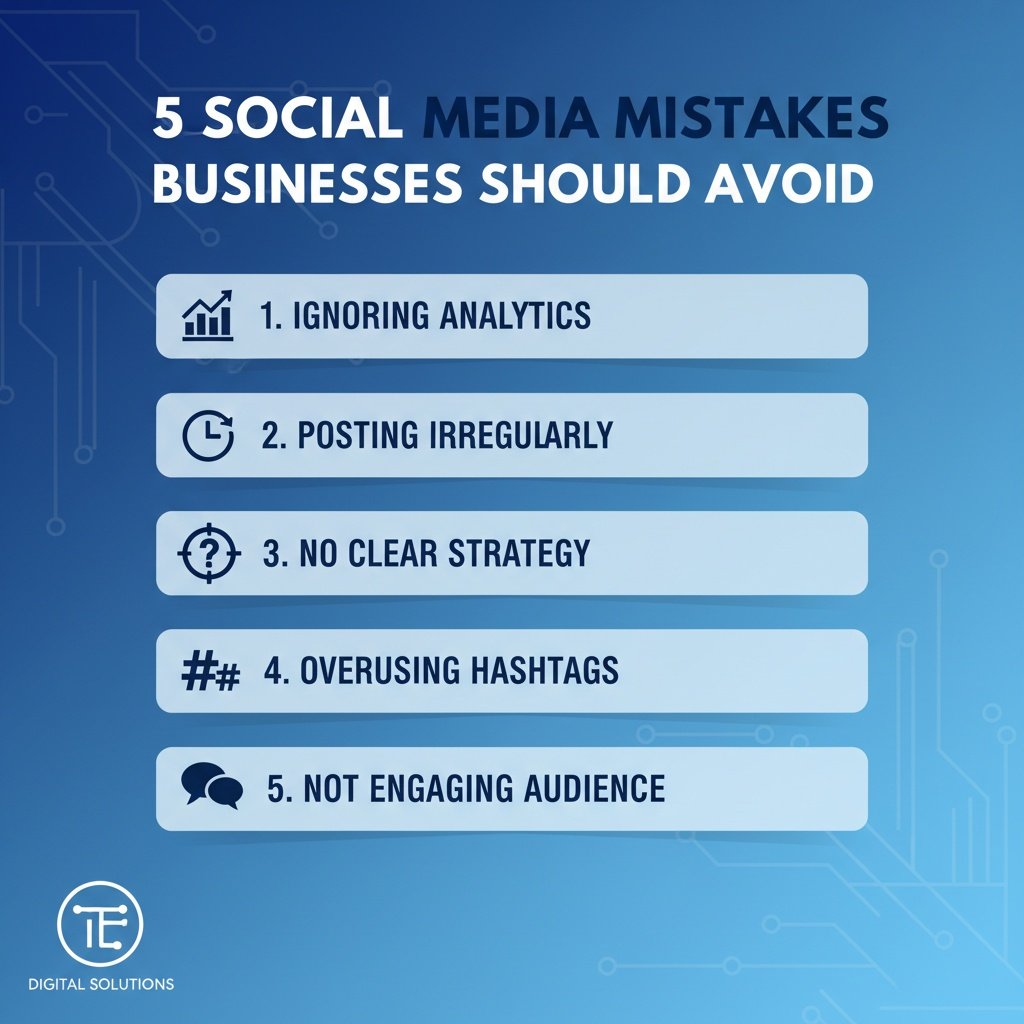
5 Social Media Mistakes Businesses Should Avoid (and How to Fix Them) By Your Company • Sep 10, 2025 • 6 min read Social media can accelerate growth — or drain resources. These five errors are common and fixable. Read the short fixes you can implement today. 1 Posting Without a Clear Strategy Random posting wastes time and confuses followers. Solution: Define 1–3 goals (awareness, lead gen, support). Pick platforms where your audience is active. Create a simple content calendar: 1 pillar post + 2 repurposed pieces per week. 2 Ignoring Engagement and Community Not replying to comments or DMs loses trust and opportunities. Solution: Reserve 10–20 minutes daily for replies. Use saved replies for common questions. Run polls and AMAs to invite conversation and gather content ideas. 3 Inconsistent Brand Voice and Visuals Different tones or colors across platforms weaken recognition. Solution: Make a mini style guide: logo use, brand colors, tone examples, and 1–2 approved fonts. Use templates for quotes, carousels, and stories to speed production. 4 Overposting or Sharing Irrelevant Content Too many low-value posts irritate followers; irrelevant posts dilute your message. Solution: Prioritize quality over quantity. Post fewer, higher-value pieces and reuse top performers. Audit post performance monthly and stop formats that underperform. 5 Neglecting Analytics and Optimization Without tracking, you can’t improve results or justify budget. Solution: Set KPIs (engagement, click-through, leads) and track them in platform insights + Google Analytics with UTM tags. Test creative and copy (A/B) and iterate monthly. Get a quick social audit See our services Share: LinkedIn · X Pro tip: Start with a 30-day experiment: one content calendar, one 15-minute engagement window daily, and one analytics review each month.

The Top 5 Social Media Mistakes Read More »

Want to boost your website traffic?

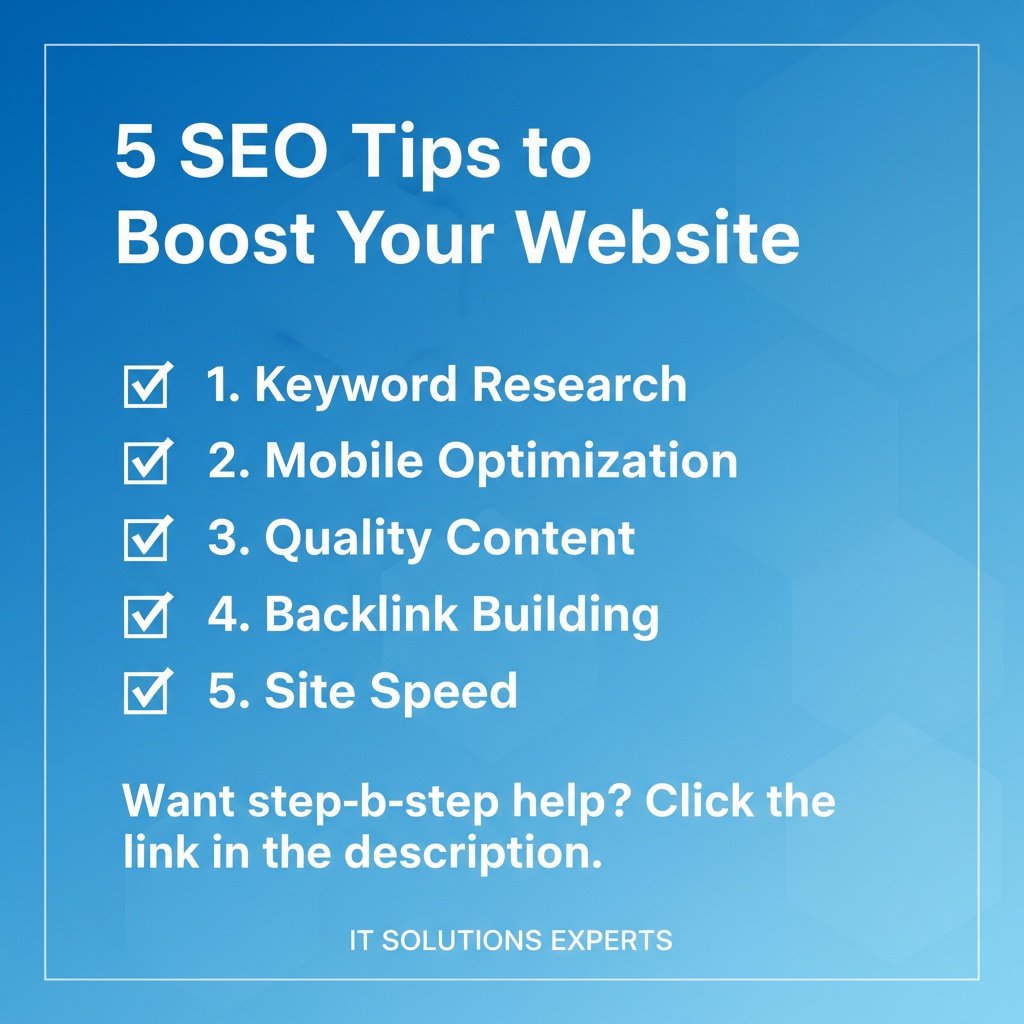
IT IT Solutions Experts 5 SEO Tips to Quickly Boost Your Website Traffic Actionable steps for each tip — follow these in order to see measurable improvements. Read time: 5 min Beginner → Advanced Below you’ll find clear, ready-to-implement advice on: keyword research, mobile optimization, quality content, backlink building and a quick technical audit. Scroll down for step-by-step actions and examples you can start doing today.

Want to boost your website traffic? Read More »

Ready for Digital Transformation? Avoid the #1 Mistake Businesses Make

Is Your Business Ready for Digital Transformation?

Digital Transformation — Practical Guide Is your business really ready for digital transformation, or missing a hidden step most overlook? Many companies rush to adopt technology — new websites, CRMs, e-commerce or ads — but stall later because they skipped one critical layer: repeatable business processes and measurable customer journeys. Below are the best solutions, a practical checklist, SEO-ready subtopics you can use in multiple blog posts, and code/snippets you can paste directly. 1 The hidden step (short answer): Before buying tools or launching campaigns, map and document your customer journey and internal processes — who does what, when and how success is measured. Without this, technology automates broken workflows. 7-step playbook to avoid the common mistake Map the customer journey. From discovery → decision → delivery → support. Document touchpoints, expected timelines and conversion triggers. Define measurable outcomes. Revenue per channel, average order value, lead-to-customer rate, churn — set KPIs for each stage. Fix processes before automating. Standardize quoting, order fulfillment, returns and escalation paths with clear owners. Choose tech to solve gaps — not for novelty. Prioritize integrations (website → CRM → accounting) and API compatibility. Start with 1 pilot. Run a single product/service through the new digital flow, measure, iterate. Train staff & document SOPs. Create short SOP videos and checklist templates for every handoff point. Review monthly with data. Use dashboards to compare KPIs to targets and revise processes every 30–60 days. Technical & SEO checklist (must-dos) Fast hosting + mobile-first design. Aim LCP & TTFB under targets. On-page SEO: one primary keyword per page, clear H1 → H2 structure, descriptive URL slug. Schema: FAQ, Product, Breadcrumbs (we include an FAQ JSON-LD at the end). Image alt text & compressed WebP versions; lazy-load non-critical images. Analytics + goal tracking (GA4 + server-side or tag manager where possible). Backups, SSL, and basic security hardening (limit plugins; update core & plugins). Content structure (SEO-optimized blog outline you can reuse) Use these H2/H3 headings (and internal linking) to rank for intent-driven queries: H2: Why technology alone won’t transform your business H2: The hidden step: process mapping & why it matters H2: 7-step playbook to prepare your business for digital H2: Technical SEO checklist for transformation projects H2: Case study / Pilot results (use real metrics) H2: Tools & partners for each stage H2: FAQ (target long-tail queries) Quick wins you can do today Create a single process map for how leads are handled (Google Drawings or a simple diagram). Add one tracking event for the most important conversion (lead form submit or checkout complete). Run a mobile speed test and fix the top 3 issues (images, render-blocking JS, caching). Write a short SOP (3 steps) for the most common manual task and train two staff members. Tools we recommend (by stage): Discovery & CRM: HubSpot (free CRM) or Zoho CRM Website & CMS: WordPress + lightweight theme + WP Rocket / perf plugins Analytics & tracking: Google Analytics (GA4), Google Tag Manager Automation: Zapier / Make.com for connecting tools Customer support: Freshdesk or a shared Gmail + labels for small teams KPIs to watch (by lifecycle stage) Acquisition: Cost per lead, organic visits, search CTR Activation: Lead → Qualified lead rate, demo sign-ups Revenue: Conversion rate, average order value, LTV Retention: Repeat purchase rate, churn Suggested internal links & pillar pages /digital-transformation-checklist /crm-implementation-guide /website-seo-performance-audit /case-studies/pilot-results Images & alt text suggestions (for accessibility + SEO) Hero image: “team-mapping-customer-journey.jpg” — alt=”Team mapping customer journey on whiteboard” Process diagram: “process-flow-diagram.webp” — alt=”Digital transformation process diagram with stages” Pilot metrics chart: “pilot-results-chart.png” — alt=”Pilot results showing conversion uplift over 90 days” Want quick copy variations for social or newsletter? Use these microlines as teasers: Is your process broken before you automate? Map the journey → Choose tools → Measure outcomes 1 pilot beat 10 untested rollouts Call to action Need a free 30-minute audit of your customer journey and quick fixes? Request a free audit on WhatsApp FAQ (useful for users and search engines) Q: What is the single biggest mistake businesses make when going digital? A: Skipping process mapping and KPI definition before adopting technology. If the process is unclear, tech will only scale confusion. Q: How long does a proper digital transformation pilot take? A: Typically 6–12 weeks for a single product/service to design, implement, measure and iterate. Q: What is the first step to prepare for digital transformation? A: Map your customer journey and document current workflows. Identify the top 2 friction points to solve first. Posted: September 8, 2025 🚀 See Our Expert Services 💬 Chat on WhatsApp

Is Your Business Ready for Digital Transformation? Read More »